Commercial General Liability Insurance: Court Suggests Coverage for Subcontractor Defective Work |[OH CT APP]|
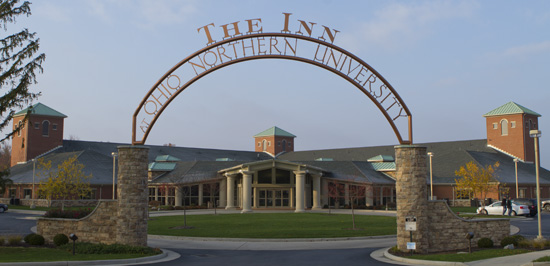
In 2008, Ohio Northern University (ONU) contracted with a general contractor, Charles Construction Services, Inc. (CCS), for the construction of a 57,000 square foot luxury hotel and conference center. After completion, ONU found water leaks in and moisture damage to the interior and exterior walls. Because of the leaks, ONU investigated and discovered structural defects that required total removal and replacement of the brick façade. In 2012, ONU sued CCS for, among other things, breach of contract and sought to recover damages for defective construction. In response, CCS brought a third-party lawsuit against its subcontractors, alleging that they were responsible for the defective work.
In 2013, a year into the lawsuit, CCS’s insurer entered the case. Cincinnati Insurance Company (CIC) intervened and sought a summary judgment against CCS, asking the court to find that it did not owe CCS a duty to defend and indemnify under its commercial general liability (CGL) policy. CIC relied on the Ohio Supreme Court’s 2012 ruling in Westfield Ins. Co. v. Custom Agri Systems, Inc. where the court held:
“[C]laims of defective construction or workmanship brought by a property owner are not claims for ‘property damage’ caused by an ‘occurrence’ under a commercial general liability policy.”
ONU and CCS responded with cross-motions for summary judgment against CIC.
At trial, the issue was whether ONU’s claims against CCS for its subcontractors’ defective construction fell within the insurance policy issued by CIC. ONU and CCS argued that (1) the Custom Agri decision only denies CGL coverage from protecting against its own defective work, not that of its subcontractors; (2) Custom Agri did not determine what constitutes an “occurrence” under a “products-completed operations” policy; and (3) that exceptions to coverage exclusions within the policy restored its CGL coverage. (Emphasis added). Against ONU and CCS’s arguments, the trial court found that the “products-completed operations” clause and exceptions to the exclusions did not expand the coverage for “property damage” without showing an “occurrence.” Accordingly, it granted CIC’s motion for summary judgment. ONU and CCS appealed.
In OHIO N. UNIV. v. CHARLES CONSTR. SERVS., INC., 2017-Ohio-258, 2017 WL 334151 (3d Dist. 23 January, 2017), the Ohio Court of Appeals, Third District, held that “at the very minimum” there existed an ambiguity in the CGL policy regarding its coverage for “property damage” caused by a subcontractor’s defective workmanship. Therefore, because a genuine issue of material fact existed, the court vacated the trial court’s summary judgment award and remanded for further proceedings.
In deciding that “at the very minimum” there was an ambiguity, the court discussed in detail its inclination to find that the CGL policy did cover the faulty work of CCS’s subcontractors. (Emphasis added). The court started by analyzing the Ohio Supreme Court precedent under the Custom Agri decision. There, the Ohio Supreme Court analyzed the CGL policy under a two-prong test:
(1) Are claims of defective construction/workmanship brought by a property owner claims for “property damage” caused by an “occurrence” under a commercial general liability policy?
(2) And, if so, does the contractual liability exclusion in the commercial general liability policy preclude coverage for claims for defective construction/workmanship?
The Ohio Supreme Court, however, never got to the second prong after finding that an insured’s own work does not constitute an “occurrence” necessary to trigger CGL coverage. Because policies define an “occurrence” as “an accident”, the Court found that one’s own defective work could not constitute as an occurrence. The key questions, according to the Court, were whether the contractor controlled the process leading to the damages or whether it should have anticipated them. (Emphasis added).
Unlike the Ohio Supreme Court in Custom Agri, here, the Third District Court found it persuasive that CCS sought coverage for the defective work of its subcontractors, not of its own. The court, however, declined to rule on this issue.
After reviewing precedent, the court dissected CIC’s issued CGL policy. The following provisions were of particular interest:
[Coverage for Bodily Injury and Property Damage]
1. Insuring Agreement
a. We will pay those sums that the insured becomes legally obligated to pay as damages because of “bodily injury” or “property damage” to which this insurance applies. We will have the right and duty to defend the insured against any “suit” seeking those damages. However, we will have no duty to defend the insured against any “suit” seeking damages for “bodily injury” or “property damage” to which this insurance does not apply.
b. This insurance applies to “bodily injury” and “property damage” only if:
(1) The “bodily injury” or “property damage” is caused by an “occurrence” that takes place in the “coverage territory;”
* * *
- “Occurrence” means an accident, including continuous or repeated exposure to substantially the same general harmful conditions.
* * *
[Exclusions]
This insurance does not apply to:
* * *
- Damage to Property
“Property damage” to:
* * *
[J].
(5) That particular part of real property on which you or any contractors or subcontractors working directly or indirectly on your behalf are performing operations, if the “property damage” arises out of those operations.
(6) That particular part of any property that must be restored, repaired or replaced because “your work” was incorrectly performed on it.
* * *
Paragraph (6) of this exclusion does not apply to “property damage” included in the “products-completed operations hazard.”
* * *
[L]. Damage to Your Work:
“Property damage” to “your work” arising out of it or any part of it and included in the “products-completed operations hazard.”
This exclusion does not apply if the damaged work or the work out of which the damage arises was performed on your behalf by a subcontractor.
The court first determined that, under Sections 1 and 16, the CGL policy covers “property damage” caused by “an occurrence.” Because the court must review an entire contract to fully determine the effects of its provisions, it moved to the policy coverage exclusions. While Section J(5) appears to exclude coverage of defective work by both contractors and subcontractors, the court interpreted the provision’s use of the present tense (i.e., “working”) as meaning that the J(5) exclusion only applied to work in progress. ONU’s claim, however, arose after project completion.
Next, the court noted that a paragraph that followed Section J(6) created an “exception to the exclusion that restores [CGL] coverage if the ‘property damage’ is included in the ‘products-completed operations hazard.’” Because ONU’s claim arose after project completion, the court suggested that the ‘products-completed operations’ coverage applies. (Emphasis added).
Finally, the court indicated that the exclusion under Section L had an exception when the defective work “was performed on [the contractor’s] behalf or by a subcontractor. (Emphasis added). Accordingly, CCS’s claim that its subcontractor performed the defective work seemed to operate as an exception to coverage exclusion.
After reviewing the policy, the court cited the move other states had made to include defective work performed by an insured’s subcontractor within the term “occurrence” to trigger coverage. Specifically, the court cited decisions to include such coverage by the supreme courts in Iowa, Indiana, and West Virginia.
In the end, the Ohio Court of Appeals, Third District, did not decide on the coverage nor did it adopt the neighboring jurisdictions persuasive decisions. Instead, it only found that an ambiguity existed necessary to vacate the summary judgment and remand for further proceedings.
Best Practices:
- Significant development in Ohio insurance law – Since the Ohio Supreme Court’s ruling in Custom Agri, Ohio law has generally excluded defective construction from “occurrence” and denied CGL coverage. While this court did not rule on the merits, it strongly indicated an interest in limiting the scope of Custom Agri’s reach.
- Possible general contractor CGL coverage for subcontractor defective work: Under the Third District Court’s analysis, similar CGL policies provide coverage for subcontractor defective work if the property damage arises after project completion.
- Key insurance policy terms: The phrases “does not apply to” or “does not apply if” captured the exclusions (denying coverage) and exceptions (restoring coverage) respectively. These key phrases may determine the scope of your CGL policy coverage.
- CGL coverage two-prong test: The test in Custom Agri was not actually developed by the Ohio Supreme Court. Instead, the two issues were certified by the federal Sixth Circuit Court of Appeals for the Ohio Supreme Court to answer. In essence, to satisfy the test, an insured plaintiff must show that (1) the claim against it (i.e., breach of contract for defective construction) is included under the definition of “occurrence” and (2) no provision within the CGL policy excludes it from coverage.
- CGL coverage does not apply to controlled or anticipated business risk: Although this court appeared to limit the effect of the Custom Agri decision, it nevertheless affirmed the rule that controlled or anticipated business risk are outside the definition of “occurrence.” One might quickly determine that no coverage exists by asking whether he or she (1) controlled the process or substance that resulted in a claim or (2) should have anticipated it.
- Neighboring jurisdiction case law supporting coverage for subcontractor defective work: National Surety Corporation v. Westlake, 880 N.W.2d 724, 740–42 (Iowa Sup.Ct.2016); Cherrington v. Erie Insurance Property and Casualty, 231 W.Va. 470, 745 S.E.2d 508 (2013); Sheehan Construction Company, Inc. v. Continental Casualty Company, 935 N.E.2d 160, 171–72 (Indiana Sup.Ct.2010).
– Christian H. Robertson II
All materials have been prepared for general information purposes only to permit you to learn more about construction law. The information presented is not legal advice, is not to be acted on as such, may not be current and is subject to change without notice.l



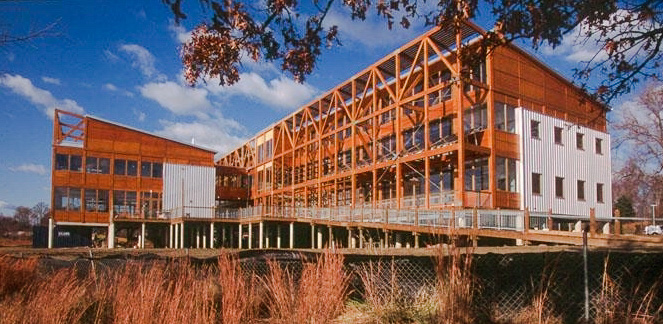 Chesapeake Bay Foundation’s Philip Merrill Environmental Center – Annapolis, Maryland


 Ohio Construction Law Blog