Commercial General Liability Insurance Coverage of Subcontractor Defective Work: How Most State Courts Find Coverage for General Contractors

Image result for ohio supreme court

Last year I wrote about a construction case decided by an Ohio Court of Appeals that discussed general contractors’ insurance issues when their subcontractor’s work is defective. In that case, a commercial general liability (CGL) insurer denied a project owner and general contractor coverage for the damages caused by a subcontractor’s defective work. The trial court agreed with the insurance company and found that there was no coverage under the CGL policy’s Your Work Exclusion. The Ohio Court of Appeals, however, disagreed with the trial court and the insurer, finding that the Subcontractor Exception to the Your Work Exclusion–that is, that the Your Work Exclusion does not apply when the “Work” is a Subcontractor’s–restores coverage for the owner and general contractor. The insurer appealed and the Ohio Supreme Court has since accepted the case. The Ohio Supreme Court has received written briefs from both the insurer-appellant and the owner/general contractor-respondent.

After posting my blog on the case last year, I decided to write a longer piece on the way that other State supreme courts and legislatures handle the same issue–whether a general contractor’s CGL policy covers damages caused by a subcontractor’s defective work. So I teamed up with the Michigan Business & Entrepreneurial Law Review and published a note answering that very question. You can find the note and learn more about CGL coverage by ordering a copy from the Michigan Business & Entrepreneurial Law Review or at the following website: https://repository.law.umich.edu/mbelr/vol7/iss1/6/.

Professional Services Exclusions: Wrongful Death Claim Excluded from Project Engineer’s CGL Insurance Coverage |[6TH CIR CT]|

Professional Services Exclusions: Wrongful Death Claim Excluded from Project Engineer’s CGL Insurance Coverage |[6TH CIR CT]|

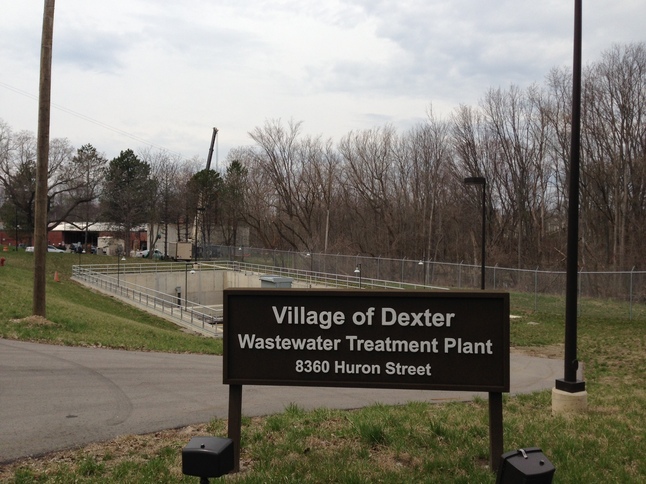
042313_dexter_wastewater_explosion-thumb-646x484-140522
Dexter (Michigan) Wastewater Treatment Plant

The Village of Dexter, Michigan (Dexter) hired an architecture and engineering firm, Orchard, Hiltz & McCliment, Inc. (OHM), to manage upgrades to its wastewater treatment plant. OHM offered its professional engineering services and agreed to, among other things, (1) prepare all design documents for the project and (2) be responsible for all “contract administration, construction engineering, construction observation, and construction staking.” After hiring OHM, Dexter contracted with general contractor A.Z. Shmina (Shmina) for project construction. The Dexter-Shmina contract explicitly designated OHM as the project engineer and required Shmina to maintain commercial general liability coverage for “[Shmina], the [Village of Dexter], and Orchard, Hiltz & McCliment, Inc.,…from claims arising out of the work described in this Contract.”

Shmina contacted Phoenix Insurance Company (Phoenix) for a commercial general liability policy. The Phoenix policy obtained provided that coverage would extend to additional insureds for whom Shmina “agree[d] in a written contract requiring insurance to include as an additional insured.” However, the Phoenix commercial general liability policy included the following exclusion (emphasis added):

[Excluded from this endorsement, however, is coverage for bodily injury, personal injury, or property damage arising out of the rendering of, or failure to render, any professional architectural, engineering or surveying services, including]:

  1. The preparing, approving, or failing to prepare or approve, maps, shop drawings, opinions, reports, surveys, field orders or change orders, or the preparing, approving, or failing to prepare or approve, drawing and specifications; and
  2. Supervisory, inspection, architectural or engineering activities.

To facilitate the removal of a digester tank at the wastewater treatment plant, Shmina subcontracted with Platinum Mechanical, Inc. (Platinum) who subcontracted with Regal Rigging & Demolition (Regal). As required under the Shmina-Platinum contract, Platinum obtained a commercial general liability policy from Federated Mutual Insurance Company (Federated). Although the Shmina-Platinum contract required Platinum to add Shmina, Dexter, and any additional parties as required by the Dexter-Shmina contract, Platinum’s Federated commercial general liability policy extended coverage only to the following: “any person or organization…for whom you are performing operations when you and such person or organization have agreed in writing in a contract or agreement that such person or organization be added as an additional insured on your policy.”

The Federated policy, similar to Phoenix, contained a professional services exclusion, excluding coverage for bodily injury, property damage or personal injury resulting from:

[a]ny person or organization whose profession, business or occupation is that of an architect, surveyor or engineer with respect to liability arising out of the preparation or approval or the failure in preparation or approval of maps, shop drawings, opinions, reports, surveys, field orders, change orders, designs, drawings, specifications or the performance of any other professional services by such person or organization[.]

On 22 April, 2013, after construction had commenced, a fatal incident occurred on the project. While a Regal worker was using a cutting torch to remove bolts from the digester tank lid, sparks ignited gas within the tank and caused it to explode. The explosion injured the Regal worker and killed a nearby Platinum pipefitter. Present during the incident, was an OHM engineer.

Afterwards, the Regal worker and the estate of the deceased Platinum pipefitter respectively brought personal injury and wrongful death actions against OHM. Both parties alleged that OHM breached its duty as an ordinary professional engineer. The Regal worker claimed that OHM “had a duty to exercise ordinary skill and care common to professional engineers and/or architects [that required it] to supervise all operations and to include in the plans, specifications and drawings, methods for safe removal of the digester lids.” (Emphasis added.)

OHM filed a declaratory action asking a Michigan state court to compel Phoenix and Federated to defend and indemnify OHM per their commercial general liability policies. OHM asserted that it was an additional insured covered by both policies and that neither policy’s professional services exclusion applied. After the defendant-insurers removed the case to federal court and filed motions for summary judgment against OHM, the Eastern District of Michigan federal court awarded the insurers their motion. Specifically, the court found that only the Phoenix policy covered OHM, since Federated’s policy did not directly or indirectly mention OHM. Then, the court interpreted the underlying claims brought against OHM as sufficiently within Phoenix’s professional services exclusion provision. OHM appealed to the federal Sixth Circuit Court of Appeals.

In ORCHARD, HILTZ & MCCLIMENT, INC. v. PHOENIX INS. CO., Nos. 16-1176, 16-1231, 2017 WL 244787 (6th Cir. Ct. 20 January, 2017), the Sixth Circuit Court of Appeals affirmed the district court’s summary judgment award finding no genuine dispute of material fact that the claims against OHM fell within the defendant-insurers’ professional services exclusion. Applying Michigan law under the Erie doctrine, the federal court applied the relevant insurance policy interpretation standard. When an insurer’s duty to the insured is in question, the court must determine (1) whether coverage exists and (2), if so, whether the policy contains an exclusion to the coverage. The court agreed that the Phoenix policy covered OHM; however, it did not decide on the issue of Federated’s policy coverage because the court concluded that the exclusions were sufficiently determinative.

The court then moved to the breadth of the term “professional services.” Under Michigan law, professional services broadly covers duties that are “predominately intellectual in nature.” However, the court emphasized that professional titles alone do not implicate professional services. Instead, it is the conduct that caused the underlying claim against the insured that implicates professional services. (emphases added). To determine whether the underlying personal injury and wrongful death claims were caused by OHM’s conduct fell within the professional services exclusion, the court applied the Hilderbrandt 2-part project engineer professional services analysis: An insurer’s professional services exclusion applies when (1) the insured has a duty to recognize and advise on safety violations in a given project and (2) a failure to do so includes a failure to render the professional inspection and supervision services because the recognition of such a violation involves some specialized knowledge and expertise in the area in which the underlying claim occurred. (emphasis added).

The court reasoned that because Dexter hired OHM to design, monitor, and supervise all aspects of the project OHM had a duty to recognize and advise on safety violations. The underlying claims contended that OHM breached that duty failing to provide safer procedures for digester lid removal involves a specialized knowledge and expertise. The underlying claims, the court concluded, were “predominately intellectual in nature.” Consequently, both policies excluded OHM’s coverage.

In the alternative, OHM asserted the illusory coverage doctrine, namely, that Michigan case law requires courts to interpret insurance policies so that they are not “merely a delusion to the insured.” That is, so that the commercial general liability policy actually covers something for project engineers. The court briefly dispensed with the argument by stating that coverage existed for work that fell outside of the professional services exclusion.

Best Practices:

  1. Insurer’s duty 2-part test – As the court expressed, a common test for determining an insurer’s duty to an insured is (1) whether coverage exists and (2), if so, whether an exclusion to the coverage exists within the policy.
  2. Commercial general liability professional services exclusion – Such professional services exclusions are common within commercial general liability policies.
  3. Professional liability insurance – To fill a liability gap that commercial general liability policies might exclude, professional liability insurance policies might be more appropriate for covering such professional services. OHM actually had professional liability insurance, and the insurer has defended OHM against the claims.
  4. Duty to defend v. indemnify – If covered for a claim without exclusion to defend and indemnify, the insurer’s duty to defend is much broader than its duty to indemnify. In jurisdictions, such as Michigan, the former requires the insurer to defend the insured against all covered claims even if the actions seem frivolous or without merit. The duty to indemnify, on the other hand, cannot be triggered until the insured’s liability for the underlying claims is determined. Generally, however, both duties must be specified within the policy for each to apply.
  5. Professional services determined by the nature of the act or omission – Determining whether a professional service was being rendered depends on the nature of the act or omission, not the character or title of the person who acted or failed to act.
  6. Burdens of proof on both the insured and insurer – Under Michigan law, the insured (here OHM) must first prove that coverage exists. Then, it is the insurer’s (here Phoenix and Federated) burden to prove that an exclusion within the coverage applies.
  7. Putative additional insured – Generally, coverage to parties not directly involved in a commercial general liability policy is limited to additional parties expressly included. However, courts often permit “putative” additional insureds within the coverage based on their contractual privity, or connection, with the insured. Here, the district court denied such additional coverage from OHM to the Federated policy because it was not expressly included. Although the Sixth Circuit declined to rule on that decision, it is in the best interest of the owners, architects, general contractors, and subcontractors to contractually require that other parties include them in their commercial general liability policies as additional insureds.
  8. Hilderbrandt 2-part project engineer professional services analysis – An insurer’s professional services exclusion applies when (1) the insured has a duty to recognize and advise on safety violations in a given project and (2) a failure to do so includes a failure to render the professional inspection and supervision services because the recognition of such a violation involves some specialized knowledge and expertise in the area in which the underlying claim occurred. (See Hilderbrandt ex rel. Estate of Hilderbrandt v. Rumsey & Sons Constr., No. 220340, 2001 WL 624966 (Mich. Ct. App. June 5, 2001)).
  9. Illusory coverage doctrine – As stated above, the doctrine has generally developed to deny court-interpretations of policies that render provisions useless. Based on the Sixth Circuit’s brief dispensation of the claim, it appears to receive less credibility in certain arguments. It nevertheless makes one wonder. For project engineers, what is “outside the provision of professional services?”
  10. Michigan law – The court’s reasoning was and conclusion is a product of Michigan state law. Accordingly, most of the decision is not binding precedent in Ohio. Nevertheless, the Sixth Circuit’s coverage of Michigan, Ohio, Kentucky, and Tennessee renders its state-specific decisions especially persuasive across the Circuit.

– Christian H. Robertson II

All materials have been prepared for general information purposes only to permit you to learn more about construction law. The information presented is not legal advice, is not to be acted on as such, may not be current and is subject to change without notice.


Commercial General Liability Insurance: Court Suggests Coverage for Subcontractor Defective Work |[OH CT APP]|

Commercial General Liability Insurance: Court Suggests Coverage for Subcontractor Defective Work |[OH CT APP]|
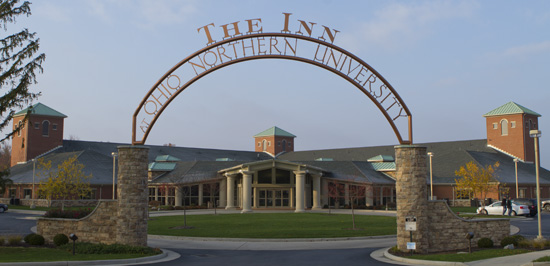
onu

In 2008, Ohio Northern University (ONU) contracted with a general contractor, Charles Construction Services, Inc. (CCS), for the construction of a 57,000 square foot luxury hotel and conference center. After completion, ONU found water leaks in and moisture damage to the interior and exterior walls. Because of the leaks, ONU investigated and discovered structural defects that required total removal and replacement of the brick façade. In 2012, ONU sued CCS for, among other things, breach of contract and sought to recover damages for defective construction. In response, CCS brought a third-party lawsuit against its subcontractors, alleging that they were responsible for the defective work.

In 2013, a year into the lawsuit, CCS’s insurer entered the case. Cincinnati Insurance Company (CIC) intervened and sought a summary judgment against CCS, asking the court to find that it did not owe CCS a duty to defend and indemnify under its commercial general liability (CGL) policy. CIC relied on the Ohio Supreme Court’s 2012 ruling in Westfield Ins. Co. v. Custom Agri Systems, Inc. where the court held:

“[C]laims of defective construction or workmanship brought by a property owner are not claims for ‘property damage’ caused by an ‘occurrence’ under a commercial general liability policy.”

ONU and CCS responded with cross-motions for summary judgment against CIC.

At trial, the issue was whether ONU’s claims against CCS for its subcontractors’ defective construction fell within the insurance policy issued by CIC. ONU and CCS argued that (1) the Custom Agri decision only denies CGL coverage from protecting against its own defective work, not that of its subcontractors; (2) Custom Agri did not determine what constitutes an “occurrence” under a “products-completed operations” policy; and (3) that exceptions to coverage exclusions within the policy restored its CGL coverage. (Emphasis added). Against ONU and CCS’s arguments, the trial court found that the “products-completed operations” clause and exceptions to the exclusions did not expand the coverage for “property damage” without showing an “occurrence.” Accordingly, it granted CIC’s motion for summary judgment. ONU and CCS appealed.

In OHIO N. UNIV. v. CHARLES CONSTR. SERVS., INC., 2017-Ohio-258, 2017 WL 334151 (3d Dist. 23 January, 2017), the Ohio Court of Appeals, Third District, held that “at the very minimum” there existed an ambiguity in the CGL policy regarding its coverage for “property damage” caused by a subcontractor’s defective workmanship. Therefore, because a genuine issue of material fact existed, the court vacated the trial court’s summary judgment award and remanded for further proceedings.

In deciding that “at the very minimum” there was an ambiguity, the court discussed in detail its inclination to find that the CGL policy did cover the faulty work of CCS’s subcontractors. (Emphasis added). The court started by analyzing the Ohio Supreme Court precedent under the Custom Agri decision. There, the Ohio Supreme Court analyzed the CGL policy under a two-prong test:

(1) Are claims of defective construction/workmanship brought by a property owner claims for “property damage” caused by an “occurrence” under a commercial general liability policy?

(2) And, if so, does the contractual liability exclusion in the commercial general liability policy preclude coverage for claims for defective construction/workmanship?

The Ohio Supreme Court, however, never got to the second prong after finding that an insured’s own work does not constitute an “occurrence” necessary to trigger CGL coverage. Because policies define an “occurrence” as “an accident”, the Court found that one’s own defective work could not constitute as an occurrence. The key questions, according to the Court, were whether the contractor controlled the process leading to the damages or whether it should have anticipated them. (Emphasis added).

Unlike the Ohio Supreme Court in Custom Agri, here, the Third District Court found it persuasive that CCS sought coverage for the defective work of its subcontractors, not of its own. The court, however, declined to rule on this issue.

After reviewing precedent, the court dissected CIC’s issued CGL policy. The following provisions were of particular interest:

[Coverage for Bodily Injury and Property Damage]

1. Insuring Agreement

a. We will pay those sums that the insured becomes legally obligated to pay as damages because of “bodily injury” or “property damage” to which this insurance applies. We will have the right and duty to defend the insured against any “suit” seeking those damages. However, we will have no duty to defend the insured against any “suit” seeking damages for “bodily injury” or “property damage” to which this insurance does not apply.

b. This insurance applies to “bodily injury” and “property damage” only if:

(1) The “bodily injury” or “property damage” is caused by an “occurrence” that takes place in the “coverage territory;”

* * *

  1. “Occurrence” means an accident, including continuous or repeated exposure to substantially the same general harmful conditions.

* * *

[Exclusions]

This insurance does not apply to:

* * *

  1. Damage to Property

“Property damage” to:

* * *

[J].

(5) That particular part of real property on which you or any contractors or subcontractors working directly or indirectly on your behalf are performing operations, if the “property damage” arises out of those operations.

(6) That particular part of any property that must be restored, repaired or replaced because “your work” was incorrectly performed on it.

* * *

Paragraph (6) of this exclusion does not apply to “property damage” included in the “products-completed operations hazard.”

* * *

[L]. Damage to Your Work:

“Property damage” to “your work” arising out of it or any part of it and included in the “products-completed operations hazard.”

This exclusion does not apply if the damaged work or the work out of which the damage arises was performed on your behalf by a subcontractor.

The court first determined that, under Sections 1 and 16, the CGL policy covers “property damage” caused by “an occurrence.” Because the court must review an entire contract to fully determine the effects of its provisions, it moved to the policy coverage exclusions. While Section J(5) appears to exclude coverage of defective work by both contractors and subcontractors, the court interpreted the provision’s use of the present tense (i.e., “working”) as meaning that the J(5) exclusion only applied to work in progress. ONU’s claim, however, arose after project completion.

Next, the court noted that a paragraph that followed Section J(6) created an “exception to the exclusion that restores [CGL] coverage if the ‘property damage’ is included in the ‘products-completed operations hazard.’” Because ONU’s claim arose after project completion, the court suggested that the ‘products-completed operations’ coverage applies. (Emphasis added).

Finally, the court indicated that the exclusion under Section L had an exception when the defective work “was performed on [the contractor’s] behalf or by a subcontractor. (Emphasis added). Accordingly, CCS’s claim that its subcontractor performed the defective work seemed to operate as an exception to coverage exclusion.

After reviewing the policy, the court cited the move other states had made to include defective work performed by an insured’s subcontractor within the term “occurrence” to trigger coverage. Specifically, the court cited decisions to include such coverage by the supreme courts in Iowa, Indiana, and West Virginia.

In the end, the Ohio Court of Appeals, Third District, did not decide on the coverage nor did it adopt the neighboring jurisdictions persuasive decisions. Instead, it only found that an ambiguity existed necessary to vacate the summary judgment and remand for further proceedings.

Best Practices:

  1. Significant development in Ohio insurance law – Since the Ohio Supreme Court’s ruling in Custom Agri, Ohio law has generally excluded defective construction from “occurrence” and denied CGL coverage. While this court did not rule on the merits, it strongly indicated an interest in limiting the scope of Custom Agri’s reach.
  2. Possible general contractor CGL coverage for subcontractor defective work: Under the Third District Court’s analysis, similar CGL policies provide coverage for subcontractor defective work if the property damage arises after project completion.
  3. Key insurance policy terms: The phrases “does not apply to” or “does not apply if” captured the exclusions (denying coverage) and exceptions (restoring coverage) respectively. These key phrases may determine the scope of your CGL policy coverage.
  4. CGL coverage two-prong test: The test in Custom Agri was not actually developed by the Ohio Supreme Court. Instead, the two issues were certified by the federal Sixth Circuit Court of Appeals for the Ohio Supreme Court to answer. In essence, to satisfy the test, an insured plaintiff must show that (1) the claim against it (i.e., breach of contract for defective construction) is included under the definition of “occurrence” and (2) no provision within the CGL policy excludes it from coverage.
  5. CGL coverage does not apply to controlled or anticipated business risk: Although this court appeared to limit the effect of the Custom Agri decision, it nevertheless affirmed the rule that controlled or anticipated business risk are outside the definition of “occurrence.” One might quickly determine that no coverage exists by asking whether he or she (1) controlled the process or substance that resulted in a claim or (2) should have anticipated it.
  6. Neighboring jurisdiction case law supporting coverage for subcontractor defective work: National Surety Corporation v. Westlake, 880 N.W.2d 724, 740–42 (Iowa Sup.Ct.2016); Cherrington v. Erie Insurance Property and Casualty, 231 W.Va. 470, 745 S.E.2d 508 (2013); Sheehan Construction Company, Inc. v. Continental Casualty Company, 935 N.E.2d 160, 171–72 (Indiana Sup.Ct.2010).

– Christian H. Robertson II

All materials have been prepared for general information purposes only to permit you to learn more about construction law. The information presented is not legal advice, is not to be acted on as such, may not be current and is subject to change without notice.l

LEED Liability: Owner Sues Material Supplier for Defective “Green” Material |[MD DIST CT]|

LEED Liability: Owner Sues Material Supplier for Defective “Green” Material |[MD DIST CT]|

chesapeake-bay-foundation Chesapeake Bay Foundation’s Philip Merrill Environmental Center – Annapolis, Maryland

The Chesapeake Bay Foundation saga was a six-year litigation process after nearly ten years had passed since the project completion. Central to the case, the owner and architect risked design reliability to achieve green building objectives and lost. This is a story about the first LEED Platinum-certified building and its subsequent design defect litigation.

In 1999, the Chesapeake Bay Foundation contracted with SmithGroup architects to design and build the Philip Merrill Environmental Center near Annapolis, Maryland. Focused on promoting sustainable development on the Chesapeake Bay, the Foundation instructed SmithGroup to incorporate “green” building techniques in order to obtain a platinum certification (the highest LEED certification standard) under the Leadership in Energy and Environmental Design (LEED) program. Accordingly, SmithGroup incorporated sustainable materials in the building design, including the use of parallel strands of lumber (PSL) glued together, called Parallams, on the building’s exterior façade. Manufactured from rapidly renewable second-growth trees, LEED awards users more points during the green certification process. However, Parallam benefits do not come without costs. Because Parallam pieces require bonding smaller strips of wood together, it creates channels that longitudinally run through it in which water can infiltrate and rot over time. SmithGroup recognized this problem and sought to resolve it by requiring contractors to treat the Parallams with a preservative called PolyClear 2000. To that end, SmithGroup specified the use of PolyClear 2000 in the designs it provided for the project general contractor, Clark Construction. Then, in a purchase order agreement, Clark instructed a Parallam supplier, Weyerhaeuser Company, to treat all ordered Parallams with PolyClear 2000. Weyerhaeuser contracted the treatment out to Permapost Products Company. In Permapost’s Acknowledgement of Order, it specified that it had never treated exterior-used Parallams with PolyClear 2000 and stipulated that any potential damages should be limited accordingly:

“No claim of any kind shall be made in excess of the purchase price of the product sold hereunder with respect to which damages arise.” – Permapost Acknowledgement of Order provision

In December 2000, Clark Construction completed the project and the Foundation moved in.

A few months later, the occupants noticed leaks inside along the exterior walls and hired an engineer to conduct a survey. In his report, the engineer noted the potential (emphasis added) deterioration of the Parallams and the “cause for concern” due to their outside exposure. In 2002, the leak investigation continued and concluded that there was existing (emphasis included) damage to the Parallams:

“The pressure-treatment along with the 3–coat finish system has failed to keep the wood protected. The voids and splits in the Parallam have allowed the water to enter the wood causing the wood to swell and the repeated reduction of that humidity causing the wood to shrink. That shrinking and swelling movement has caused cracking at the joints, the wood to warp and become out of plane at the interior column joints.” – 2002 Leak Investigation Report

During the investigation, Weyerhaeuser allegedly assured the Chesapeake Bay Foundation, SmithGroup, and Clark that the Parallams were properly treated and appropriate for the project. Investigations continued on and off until 2005, at which point the leak appeared to be resolved and remediation efforts ceased. In September, 2009, during an annual inspection, the Foundation allegedly discovered the deterioration of the Parallams for the first time. A third-party inspector recommended the removal and replacement of certain Parallams on account of deterioration. The Foundation notified SmithGroup and Clark of the need for remediation. Clark then notified Weyerhaeuser and requested their cooperation in remediation. Weyerhaeuser declined to participate. Consequently, the Foundation, SmithGroup, and Clark executed a remediation agreement under which the latter two agreed to remediate the damage and pursue litigation against Weyerhaeuser for costs.

On December 3, 2010 (nearly 10 years after project completion), the Chesapeake Bay Foundation, joined by SmithGroup and Clark, sued Weyerhaeuser for, among other things, negligent treatment of the Parallams and breach of contract for failure to indemnify Clark and SmithGroup for remedial measures taken. After removing the case to federal court, Weyerhaeuser filed counterclaims against the plaintiffs and filed a third-party complaint against Permapost asserting claims for breach of contract, negligence, common law indemnification, and contribution. The third-party claims were conditioned, however, against Weyerhaeuser’s primary defense that the plaintiffs were time-barred from the complaint under Maryland’s three-year statute of limitations.

In response to Weyerhaeuser’s motion for summary judgment, the federal district court judge granted the motion finding that the statute of limitations had run. Pursuant to Maryland’s discovery rule that bars the statute of limitation time from accruing until after the claimant knows or reasonably should have known of the damage, the district court judge determined that the Foundation should have known of the Parallams’ deterioration from the 2002 report. The Foundation appealed the decision.

In CHESAPEAKE BAY FOUNDATION, INC., ET AL. v. WEYERHAEUSER CO., 580 Fed.Appx. 203 (4th Cir. July 31, 2014), the Fourth Circuit Court of Appeals determined that the lower court was wrong to infer that the Foundation had discovered the deterioration before 2009 and, therefore, vacated the summary judgment. It found that a genuine dispute existed as to whether “the water infiltration problem would have put a reasonable person on notice that the Parallams were susceptible to premature deterioration and that their PolyClear 2000 treatment would not preserve them.” In other words, the court found that the lower court improperly relied on the assumption that any ordinary person would know that wet wood rots. The court remanded the case back down to the district court for reexamination of the claims.

In CHESAPEAKE BAY FOUNDATION, INC., ET AL. v. WEYERHAEUSER CO., 2015 WL 2085477 (S.D. Md. May 4, 2015), the district court denied Weyerhaeuser and Permaposts’ motions for summary judgment for negligence in addition to Weyerhaeuser, Clark, and SmithGroup’s motions for summary judgment for indemnification. First, the court evaluated Permapost’s motion based on expert opinion testifying that the Parallams would have rotted regardless of using the PolyClear preservative and, thus, Permapost’s treatment was not the cause-in-fact. Although both sides’ wood experts testified that the Parallams would have rotted regardless, neither addressed the sufficiency of Permepost’s application of PolyClear. The court determined that a genuine issue of dispute still existed and denied the motion.

In response to the indemnification motions, the court found that SmithGroup and Clark failed to show any payments made under the remediation agreement for Weyerhaeuser to indemnify. Because indemnification claims were filed prior to payments made, the court dismissed the motion. However, noting that three years had passed since the plaintiffs’ initial indemnification claims (March 2012), the court permitted SmithGroup and Clark to produce evidence of payments made in the interim.

On July 23, 2015, the Chesapeake Bay Foundation, SmithGroup, Clark, and Weyerhaeuser settled outside of court. The third-party complaint against Permapost, however, remained unaffected.

In WEYERHAEUSER CO., ET AL. v. PERMAPOST PRODUCTS CO., No. PWG-11-47, 2015 WL 11121042 (S.D. Md. Nov. 17, 2015), the district court rendered judgment in favor of Permapost. The court found that Weyerhaeuser was unable to establish that Permapost’s application of the PolyClear 2000 was the cause. Instead, the court found that the defect was in the design rather than manufacturing. “I find, given, one, the inappropriate use of Parallams as structural support without proper weather protection, plus I find that the specification by the architect based upon the recommendation of Weyerhaeuser…but not Permapost,…PolyClear 2000 was an inappropriate preservative for the conditions of the Chesapeake Bay Foundation.”

Best Practices:

  1. Balance LEED Innovation Credit against risks of untested materials and designs – Enticed by LEED credits, the various parties took a risk in using Parallams on the exterior which resulted in water damage.
  2. Ten-Year Statute of Repose – Similar to Maryland law, Ohio law bars all claims against construction defects brought after 10 years of substantial project completion. In Ohio, however, the statute of repose has one exception. That is, if the defect is discovered between eight to ten years after project completion, the claimant receives an additional two years to sue after such discovery. Accordingly, a claimant could discover the defect nine years and eleven months after completion and then receive a two-year extension before the statute bars their claim.
  3. Limit duty to indemnify within the scope of the contract – Parties to a contract can have duties to indemnify by contract and/or common law. In Weyerhaeuser, the court extinguished Clark’s common law indemnification claim after reading a provision in the Clark-Weyerhaeuser Purchase Agreement in which Clark “agrees that it cannot seek recovery under a theory of common law indemnity for conduct that falls within the scope of a contractual indemnity clause.”
  4. Notify indemnitors of dispute resolution and demand for their participation – Often times disputes are settled out of court and liability is not legally determined. In such cases, the grounds for indemnification can be uncertain. Often times indemnitees must prove their own legal liability in order for indemnification clauses with indemnitors to be legally enforceable. However, as the Weyerhaeuser court noted, indemnitees who settle need not prove its own legal liability if they (1) notify the indemnity of dispute resolution and (2) demand its participation in the settlement.
  5. Consequential damages should still apply in LEED cases – As green building certifications become more prevalent, the need to allocate construction risk becomes more important. In some cities, such as Cincinnati, LEED-certified commercial and residential construction projects are eligible for property tax abatements. Such monetary incentives will encourage owners to require designers and contractors to obtain LEED certifications. However, if designers and contractors fail to do so, owners might seek damages for the money they would have saved in taxes had they received a LEED certification. While green building objectives are relatively new, consequential damages are not. This goes back to English Common Law in the classic case of Hadley v. Baxendale. There, the court determined, as has been upheld in the U.S., that a non-breaching party may be awarded consequential damages for lost profits arising from collateral contracts (with external third party; i.e. city tax commission) that were consequentially affected because of the breach in the primary contract if he or she shows (1) the consequential damages were foreseeable to the breaching party (they were informed), (2) the breach was the proximate cause of the lost profits, and (3) the lost profits can be measured with reasonable certainty. Construction parties should consider memorializing green building interests in contracts in order to protect collateral interests.

– Christian H. Robertson II

All materials have been prepared for general information purposes only to permit you to learn more about construction law. The information presented is not legal advice, is not to be acted on as such, may not be current and is subject to change without notice.


153.63 Escrow of Moneys due under Public Improvement Contract: Court Finds State as Public Owner, not School District|[OH CT APP]|

153.63 Escrow of Moneys due under Public Improvement Contract: Court Finds State as Public Owner, not School District|[OH CT APP]|

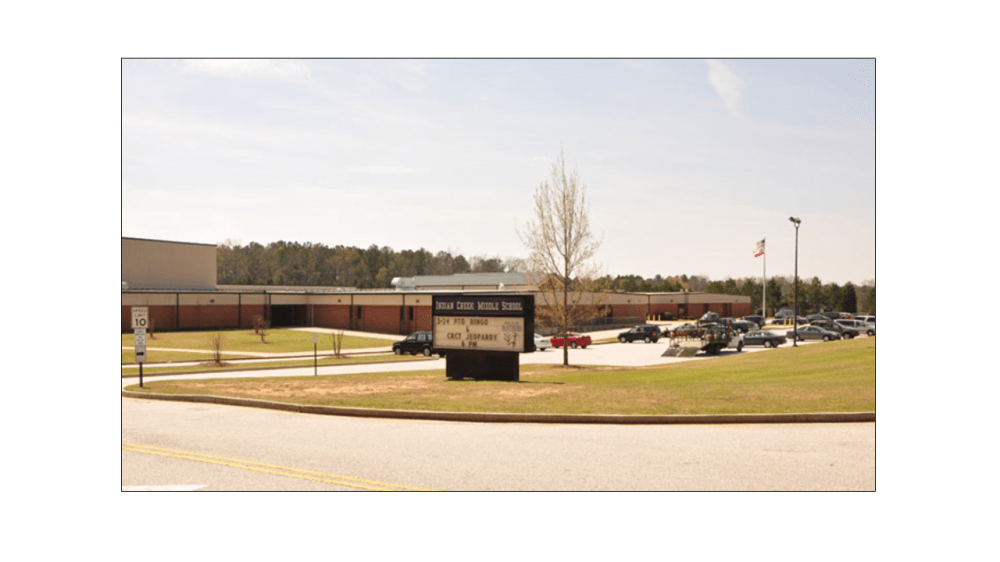
indian-creek-middle-school
Indian Creek Middle School


In 2010, a general contractor was awarded a contract to build a new middle school for the Indian Creek Local School District. The construction contract was “made and entered into by and between the [contractor] and the State of Ohio, through the President and Treasurer of the [school district].” The contract provided that, pursuant to public improvement prompt pay rule R.C. 153.63(A), all retained funds would be deposited into an escrow account or paid directly to the contractor when a major portion of the work is occupied or in use unless there existed defective work not yet remedied by the contractor. The Ohio School Facilities Commission, as co-funder of the public “classroom facilities” improvement, approved and ratified the contract.

In January 2013, the school district began occupying the facility and, shortly thereafter, discovered subsurface drainage problems in the school parking lot. The contractor claimed it resulted from the architect’s defective design and requested for the release of the construction payment retained by the school district. The request was denied. In December 2015, as a result of the payment dispute, the contractor filed a petition to compel arbitration in the Jefferson County Court of Common Pleas under R.C. 153.63(B) which states:

When a public owner, as defined in division B of section 2743.01, and the contractor disagree as to the conditions under which money is to be paid…the parties shall apply for a decision by arbitration (emphases added). R.C. 153.63(B).

The school district responded to the petition by generally claiming that the court of common pleas lacked jurisdiction (1) statutorily under R.C. 153.63(C) that, unlike section (B), requires the contractor to file disputes to the court of claims when the public owner is the state and (2) contractually under the provision that limited the jurisdiction for surety and money damages claims to the court of claims:

[Ohio Court of Claims] has exclusive jurisdiction for any action or proceeding by the Contractor or the Contractor’s surety for any money damages concerning any agreement or performance under the Contract documents. (Colaianni-Indian Creek construction contract provision).

The central issue at trial was determining the public owner of the middle school as implicated under R.C. 153.63. If the public owner was the school district and not the state, the court would grant the contractor its petition to compel arbitration over the school district’s failure to release retained funds under R.C. 153.63(B). If the public owner, however, was the state, the common pleas court would lack jurisdiction in surety disputes and the contractor’s judicial procedural remedies would be limited to the court of claims.

At trial, the court granted the contractor’s petition to compel arbitration under the definitional distinctions between “State” and “School District” set forth under court of claims statute, R.C. 2743.01, as referred to under R.C. 153.63(B), (C). The statute delineates the two under the following sections:

[The meaning of] ‘State’ does not include political subdivisions. R.C. 2743.01(A).

‘Political Subdivision’ includes school districts… R.C. 2743.01(B).

The school district appealed the decision contending that the trial court erred by defining it as the public owner rather than the state and ordering arbitration.

In COLAIANNI CONSTRUCTION, INC. v. INDIAN CREEK LOCAL SCHOOL DISTRICT, No. 16 JE 0009, 2016 WL 7291139 (7th Dist. Dec. 12, 2016), the appellate court overturned the trial court’s decision to compel arbitration for lack of subject matter jurisdiction and found that the state was indeed the public owner. The 7th District Court of Appeals found the school district’s “entirety” interpretation of R.C. 153.63 persuasive, namely the argument that sections (B) and (C) must be read with section (A) which narrows the scope of R.C. 153.63 to “money to be paid under this section… [and the] contract entered into…” That is, when the funds are at least partially provided by and the contract entered into on behalf of the Ohio School Facilities Commission, an independent state agency, its R.C. 3318 statutory provisions are implicated in the R.C. 153.63 definition of public owner. Specifically, the court cited the pertinent provision on the Ohio School Facilities Commission:

“School district” means a local, exempted village, or city school district as such districts are defined in Chapter 3311. of the Revised Code, acting as an agency of state government, performing essential governmental functions of state government pursuant to sections 3318.01 to 3318.20 of the Revised Code. (emphasis added) R.C. 3318.01(D).

Reading R.C. 3318.01 into R.C. 153.63, the appellate court found that the school district was an agent of the state and, therefore, the state was the public owner. Moreover, the court agreed with the school district’s assertion that the contract’s preamble and signature blocks further substantiated the claim that the state was the public owner and party to the contract.

The contractor claimed that this decision was contrary to the 7th District’s 1993 decision in Salem City School Dist. Bd. of Educ. v. Ultra Builders, Inc. Salem City School Dist. Bd. of Educ. v. Ultra Builders, Inc., 7th Dist. No. 92–C–48 (Jan. 29, 1993). There, the court rejected the school district’s claim that it was not the public owner and upheld the trial court’s order to arbitrate. Here, the appellate court distinguished the Ultra Builders decision in several ways. First, the court noted that the pertinent language under R.C. 3318.01(D), “acting as an agency of state government”, was not added to the statute until 1994. Second, the court highlighted the fact that the Ultra Builders contract included a mandatory arbitration provision unlike the Colaianni-Indian Creek contract. Third, the Ultra Builders contract was for improvements to a football stadium which the court said is not a “classroom facility” governed by the provisions under R.C. 3318.

The contractor argued that even if the state was the public owner, there was an escrow agreement explicitly between the Colaianni Construction and the Indian Creek Local School District to which the school district was contractually obligated. The court rejected the argument and reverted to the main construction contract between the contractor and the state. It was there, the court opined, that the escrow obligations were elucidated. Accordingly, the construction contract limited the escrow agreement’s enforcement powers.

As a result of its decision, the appellate court held “that a contractor cannot bring suit for breach of the construction contract against the school district [if] the state is the party from whom the contractor must seek compensation for breach of such contract.”

Significance:

  1. Holding requires contractors to pursue surety and escrow matter remedies in the Ohio Court of Claims against the State – As the court plainly put, “it has been held that a contractor cannot bring suit for breach of the construction contract against the school district [if] the state is the party from whom the contractor must seek compensation for breach of such contract.”
  2. In such a co-funder public improvement, should the school district and the state not have proportional responsibility to pay? – Here, the opinion merely states that the school district and Ohio School Facilities Commission “co-funded” the project. This “co-funding” was the basis through which the court permitted a statutory interpretation of R.C. 153.63 to include R.C. 3318. But how much of a contribution implicates 3318? More than 50%? 50%? 25%? 1%? Theoretically speaking, under this opinion a school district could receive a small fund contribution from the Ohio School Facilities Commission and then place the onus completely on it to make payments withheld from contractors for disagreements such as claims of defective work.
  3. Potential ex ante (contractual) provisions to assist contractors – As a standard cannon of contract law, enforceable contract provisions must abide by the relevant statutes. Certain statutory language (i.e., “unless otherwise agreed upon”) provide ex ante (“before the event”) exceptions that permit parties to contract out of statutory requirements. Because the 153.63(C) requirement that contractors file actions in the court of claims when (1) the public owner is the state and (2) the parties “disagree as to the conditions under which money is to be paid under this section”, a contractor might redefine “the conditions” in the contract so that there does not exist a disagreement that triggers section (C). For example, the contract might provide the following: if funds retained by the public owner and owed to the contractor are not paid within a certain period after a certain event (i.e., majority completion of occupation) then the parties must decide the payments due in arbitration. In effect, this contract provision creates a temporal “condition”, rather than a condition of disagreement, that triggers mandatory arbitration. This end-a-round might be given short-shrift by a court as a mere disagreement condition in disguise. Furthermore, the court might make a public policy argument that disputes with the state should be decided on in a state court. Remember, however, that this contractual suggestion is not legal advice and only a thought-provoking assessment.

– Christian H. Robertson II

All materials have been prepared for general information purposes only to permit you to learn more about construction law. The information presented is not legal advice, is not to be acted on as such, may not be current and is subject to change without notice.

Piercing the Corporate Veil: Fraudulent Builder Tries to Hide Behind Business |[OH CT APP]|

corp

Piercing the Corporate Veil: Fraudulent Builder Tries to Hide Behind Business |[OH CT APP]|

In early 2002, a property owner met with a builder to discuss remodeling his home and adding a 6,000 square foot addition. The builder discussed the project in his capacity as the sole shareholder and employee of his construction corporation, Castlebrook Builders, Inc. Claiming to be concerned about the unique nature of the project and uncertainties that might follow, the builder decided to operate on an oral agreement with the owner. Uncertainties notwithstanding, the owner contended that the builder estimated and promised that the project would cost around $500,000 and reach completion within a year.

As the project unfolded, the builder increasingly sent invoices demanding payment that exceeded the original estimation. The owner began requesting an accounting of the work done for payments made once the total charges reached $900,000. No accounting was ever provided. After over a year, the owner testified having paid a total of $1,314,218. The owner then hired a third-party builder to estimate the project value and costs to remedy construction defects. The third-party builder valued the project between $540,000 and $580,000. Because of major discrepancies between the cost promised and the subsequent payments demanded without accounting, the owner accused that the builder of fraud. To the owner and in court, the builder was unable to account for work completed for large portions of the owner’s payments. For example, among other payments discrepancies, the builder admitted to having charged the owner $59,000 for unrelated work, $197,817 of lumber not used for the project, and double charges of $36,000 for foundation work.

Even though the parties to the oral agreement did not include the builder per se, the owner alleged that the corporation was merely an alter ego of the builder and that he should be individually responsible. In 2002, the builder founded the corporation without any legal assistance. No shares had been issued and the builder was sole employee. Before and during the project, the builder used the corporate checking account to pay for his credit cards, personal medical treatment, gasoline, his truck, and his daughter’s apartment. Furthermore, evidence indicated that the builder failed to keep accurate minutes at annual shareholder meetings.

Seeking damages for the overpayments, the owner sued Castlebrook Builders, Inc. for, among other things, fraud. Under the alter ego theory, the owner sought to “pierce the corporate veil” by holding the builder personally liable. At trial, the owner showed that the builder had (1) such complete control over the corporation that it had no separate mind, will, or existence of its own, (2) exercised control over the corporation in such a manner as to commit fraud against the owner seeking to disregard the corporate entity, and (3) caused the owner to incur unjust losses. The jury rendered a verdict for the owner holding the corporation and the builder jointly and severally liable for $332,000. The builder appealed the decision claiming that the trial court erred in putting the veil piercing question to the jury and failing to provide sufficient evidence under the Belvedere veil piercing test.

In SNAPP v. CASTLEBROOK BUILDERS, INC., 2014-Ohio-163, 7 N.E.3d 574 (3d Dist. Jan. 14, 2014), the appellate court upheld the jury verdict, piercing the Castlebrook Builders’ corporate veil to hold the builder personally liable for damages caused to the home owner. The court noted that although shareholders are generally not liable for corporate misdeeds, they are not absolutely immune from liability for the actions of their corporation. The builder claimed that the exceptional nature of veil piercing requires that it is limited only to cases in which the corporation was formed to perpetuate a fraud. The court rejected this notion as cited under the Ohio Supreme Court’s decision in Belvedere which states that veil piercing may be applied when “control of the corporation by those to be held liable [is] exercised in a manner to commit fraud or an illegal act against the person seeking to disregard the corporate entity.” Belvedere Condominium Unit Owners’ Assn. v. R.E. Roark Cos., Inc., 67 Ohio St.3d 274, 617 N.E.2d 1075 (1993). Accordingly, the court held that corporate veil piercing is not limited to instances wherein the corporation was formed under fraudulent pretenses, but rather when a shareholder with complete control uses it to defraud someone.

In response to the builder’s insufficient evidence contention, the court found that the jury’s decision was based on sufficient evidence. Under the first prong of the Belvedere test, requiring a plaintiff to show that the defendant had such complete control over the corporation to the extent that it had no separate mind, will, or existence of its own, the court noted that there are several factors under Ohio jurisprudence that help determine whether this prong has been satisfied. These factors include (1) whether corporate formalities were observed, (2) whether corporate records were kept, (3) whether corporate funds were commingled with personal funds, and (4) whether corporate property was used for a personal purpose. Applying those factors, the court noted the following evidence in the case as sufficient to satisfy the control prong under Belvedere: (a) the builder failed to issue shares for the corporation, (b) the builder failed to carefully evidence his yearly corporate meetings in minutes, and (c) he commingled corporate funds with his personal finances and used the corporation’s money to pay for his credit cards, medical treatment, and his daughter’s apartment.

Additionally, the builder claimed that the second prong, here showing fraud, was not satisfied. The court did emphasize that veil piercing is limited to extreme cases of misconduct such as fraud, and that it should not be applied to mere unjust or inequitable acts. However, it found sufficient evidence of fraud under the following standard in Ohio: fraud can be shown by evidence of (1) a representation or, where there is a duty to disclose, concealment of a fact, (2) which is material to the transaction at hand, (3) made falsely, with knowledge of its falsity, or with such utter disregard and recklessness as to whether it is true or false that knowledge may be inferred, (4) with the intent of misleading another into relying upon it, (5) justifiable reliance upon the representation or concealment, and (6) a resulting injury proximately caused by the reliance. Here, the court held that the owner had sufficiently shown fraudulent acts by the builder to satisfy the test. In particular, the court found the following evidence as sufficient: (a) evidence that the builder made multiple statements regarding the estimated or promised costs of the transaction and evidence that the costs were significantly higher, (b) evidence of billing statement charges not actually owed by the home owner, (c) evidence of the owner’s reliance upon the builder’s misrepresentations of costs, and (d) inferential evidence that the builder’s decision not to use a contract as he normally did indicated his intention to overcharge the owner.

Best Practices:

  1. Veil piercing is an exceptional judicial tool for creditors and other plaintiffs to obtain pay/damages – Piercing the veil is a broad equitable doctrine by which courts impose personal liability on investors and managers in a limited liability business enterprise such as a corporation. However, as the court noted, piercing the corporate veil is limited to extreme circumstances that amount to fraud, crime, or similarly unlawful acts and not mere unjust or inequitable acts.
  2. The Belvedere standard is the standard – To pierce the corporate veil, a plaintiff must demonstrate all three of the following: (1) control over the corporation by those to be held liable was so complete that the corporation has no separate mind, will, or existence of its own, (2) defendant shareholder exercised control over the corporation in such a manner as to commit fraud, an illegal act, or a similarly unlawful act against the person seeking to disregard the corporate entity, and (3) injury or unjust loss resulted to the plaintiff from such control and wrong.
  3. If incorporated, maintain corporate formalities – As the court noted, corporate formalities such as annual shareholder meetings (sufficiently documented by meeting minutes) and issuance of shares (even if all to oneself) can rebut a claim that the shareholder’s use of the corporate form was only to shield him or her from liability.
  4. Close Corporations and LLCs may still be pierced, but corporate formalities are less probative – Because of their more personal and less formal natures, close corporations and LLCs likely need not show the same strict adherence to corporate formalities as public corporations must.
  5. Formalize income from corporations as to not commingle corporate and personal expenses – Shareholders can take income from their corporations in the form of standard dividends based on earned surplus or assets in excess of liabilities (if incorporated in Delaware, shareholders must also consider the stock par value when calculating dividends). An individual who is the sole shareholder and employee of the corporation can also take a salary for the work in his or her employee capacity.

– Christian H. Robertson II

All materials have been prepared for general information purposes only to permit you to learn more about construction law. The information presented is not legal advice, is not to be acted on as such, may not be current and is subject to change without notice.


Arbitration Clauses: Residential Contract Arbitration Clause Found Enforceable |[OH CT APP]|

Arbitration Clauses: Residential Contract Arbitration Clause Found Enforceable |[OH CT APP]|

In early 2013, a home owner entered a contract with a residential contractor for remodeling and construction work on his home. The contract was a form agreement entitled “Residential Purchase Agreement” provided by the contractor. Within the agreement, the parties agreed to the construction of a single-family home for $175,658. It also contained an arbitration clause entitled “Notice of Builder’s Right to Cure; Arbitration.” The clause contained the following pertinent parts:

All claims or disputes arising out of this Agreement or the breach thereof, including claims for construction defects that are not resolved by the right to cure process set forth in Ohio Revised Code 1312.01 et seq., shall be decided by a single arbitrator in an arbitration (emphasis added) in accordance with the construction industry arbitration rules of the American Arbitration Association. This Agreement to arbitrate shall be specifically enforceable in accordance with applicable law in any court having jurisdiction thereof. Notice of the demand for arbitration shall be filed in writing with the other party and with the American Arbitration Association and shall be made within a reasonable time after the dispute has arisen, except that ANY CLAIM NOT SUBMITTED TO ARBITRATION BY FILING A DEMAND FOR ARBITRATION WITHIN (1) YEAR AFTER THE CLAIM ACCRUES SHALL BE BARRED. The arbitrator’s decision shall be final and binding upon the Purchaser and Builder and a judgment for the enforcement thereof may be entered by a court of competent jurisdiction… Each party shall bear its own costs and expenses and an equal share of the arbitrator’s and administrative fees of arbitration, (and) the arbitrator may award attorneys fees to the prevailing party (emphasis added).

The clause was in the same font size and style as the preceding and subsequent clauses. On January 30, 2013, both parties initialed each page and signed the agreement.

Over the course of construction, problems and disputes came up. There were disputes about the timeliness of performance and deviations from the original plans. Problems with structural and workmanship defects also developed. The home owner withheld $9,750 from his final payment and hired an independent structural engineer to analyze the cost of resolving the alleged structural problems. In his report, the engineer estimated a cost of $75,000 to repair the structural issues.

On July 14, 2015, the home owner filed a lawsuit against the contractor in the Cuyahoga County Court of Common Pleas for breach of contract, negligence, and breach of implied warranty for workmanlike quality. The contractor moved to stay the trial for pending arbitration as required under the arbitration clause of the residential purchase agreement. Notwithstanding the arbitration clause, the owner claimed that the clause was unconscionable because it (1) did not define arbitration, (2) deprived him of his right to a jury trial, (3) reduced the statute of limitations, (4) lacked specific detail about the terms under the construction industry arbitration rules of the American Arbitration Association, and (5) applied loser-pay terms that violate Ohio law. The trial court agreed with the owner and found the clause unenforceable. The contractor appealed.

In CONTE v. BLOSSOM HOMES L.L.C., 2016 WL 6299148 (Ohio Ct. App. Cuyahoga County Oct. 27, 2016), the Eight District Court of Appeals reversed the trial court’s decision, finding that the arbitration clause in the residential home contract was enforceable, except for the loser-pay provision which it found unconscionable and removed from the contract. The court stated that the Ohio General Assembly, under R.C. 2711, not only encourages arbitration as a method of dispute resolution but also supports a presumption favoring arbitration when the claim in dispute falls within an arbitration clause. This presumption, however, must not be so unconscionable that “no man in his senses and not under delusion would make on the one hand, and as no honest and fair man would accept on the other.” Such unconscionability, the court explained, can be procedural or substantive.

Procedurally unconscionability occurs when the process is so unfair that one party to the agreement is devoid of any meaningful choice. The court explained that one can show procedural unconscionability by a lack of alternative sources for obtaining the goods or services. In response to the home owner’s claim that the clause did not define arbitration and he did not understand it, the court concluded that he had an opportunity to ask or seek advice elsewhere. It is not unconscionable because one did not take the time to apprise himself of the contract’s meaning.

On the other hand, an arbitration clause is unenforceable if the terms, or substance, is substantively unconscionable. According to the court, a provision is not substantively unconscionable if it is consistent with the applicable law. Although the arbitration clause did not specify the applicable state law, it said that the state law should apply where the contracted work was done. Ohio, like other states, has held that the “waiver of the right to a jury trial is a necessary consequence of agreeing to arbitration and [therefore] is not unconscionable.” Because arbitration is an obvious substitute for trial, the court held that parties are implicitly notified that they must waive their jury trial right in order to enter the contract.

The court further held that the reduced statute of limitation term was also enforceable. If the time limitation on claims was unambiguous, for a reasonable period, and not in violation of public policy, parties can reduce it by contract. The court, however, did not determine if contractual limit to one year is reasonable. Instead, it held that the reasonableness was in the arbitrator’s purview to determine. Regarding the lack of detail in the clause, the court held that the incorporation of rules under the American Arbitration Association does not alone invalidate a provision.

Unlike the other terms, the court did find the loser-pays term substantively unconscionable. The term, as listed above, placed the cost for attorneys and arbitrator fees on the losing party. This provision enables prevailing parties to place all costs of arbitration on the losing party, regardless of the claim. The Ohio Home Construction Service Supplies Act, R.C. 4722, limits the award of attorneys fees to “a defendant in the event of bad faith, groundless filings on the part of the homeowner.” In contrast to the statute’s limited applicability, this loser-pays term in the contract permits a prevailing party to shift costs for any claim. Consequently, the court found it unconscionable and excised it from the contract.

Best Practices:

  1. Arbitration clauses are presumed to be enforceable – As the court held, Ohio encourages arbitration because of benefits such as encouraging party negotiations and alleviating the cases on courts’ dockets. Today’s form agreements, such as the one in the case, tend to include arbitration clauses. Contractors and owners should know how arbitration resolves disputes.

    arby-clause
    Portion of standard arbitration clause found in many construction contracts.
  2. Things to include in arbitration clauses – Parties should include the applicable state law, forum, specific governing rules (i.e. American Arbitration Association rules governing construction), and a demand requirement for the other party to cure the defect before arbitration occurs.
  3. Ohio requires homeowners to demand residential contractors to cure defect before arbitration – Under R.C. 1312.03, the contractor has a right “to offer to resolve any alleged construction defect before the owner may commence dwelling action or arbitration proceedings against the contractor.” Although the owner need not accept the contractor’s offer to cure, he or she must nevertheless provide the contractor with the chance to cure.
  4. Arbitration clauses can be defeated – The court limited the presumption in favor of arbitration “where the disputed issue falls within the scope of the arbitration agreement, except upon grounds that exist at law or in equity for the revocation of any contract.” This provides opponents with ammo. First, ask whether the issue is governed by the contract in which the arbitration clause falls. If not, the arbitration clause has no effect. Second, consider legal or equitable reasons why the contract should not apply. Unconscionability is an adequate reason; however, courts are less likely to find unconscionable a contract in which two parties freely entered.
  5. Evidence of procedural unconscionability – Although the court did not find procedural unconscionability, it did indicate what might constitute such conduct. Evidence of “(1) denying requests to make changes to the Contract, (2) refusing to address questions regarding the provisions, or (3) somehow den[ying] [a party] the opportunity to seek third-party advice” may demonstrate procedural unconscionability.
  6. No defense for not having read the clause – Generally, courts give little validity to a party’s claim that he or she did not read the contract. “A person of ordinary mind cannot be heard to say that he was misled into signing a paper which was different from what he intended, when he could have known the truth by merely looking at what he signed.”
  7. Time limitation on construction defect claims are reducible – As the court held, parties can reduce the time limit on claims from the relevant statute of limitation. It must, however, be (1) unambiguous in the contract, (2) for a reasonable period of time, and (3) not in violation of public policy or law. The reasonable period element implies that claims have an irreducible core and therefore cannot be contracted away.
  8. Loser-pay provisions are unenforceable in residential construction contract arbitration clauses governed by Ohio law – The court held that Ohio law limits attorneys fees to certain claims in construction arbitration and therefore the broad loser-pay provision is unenforceable. However, other state law might not limit arbitration fees to certain claims.
  9. Include severability clauses – This case is a classic example of the value a severability clause has. Severability clauses permit a court to sever an unenforceable clause without voiding the entire contract. Without a severability clause, the unenforceability of the loser-pay clause could have voided the entire arbitration clause.

– Christian H. Robertson II

All materials have been prepared for general information purposes only to permit you to learn more about construction law. The information presented is not legal advice, is not to be acted on as such, may not be current and is subject to change without notice.

A Veteran’s Call to Contractors

A Veteran’s Call to Contractors

“Integrity first, service before self, and excellence in all we do!” As a young Air Force cadet, I vividly remember shouting those words each time I entered the chow hall at field training. At the time, those words were merely my ticket to eat. However, those routine recitations would soon become the principles by which I conducted myself in the military and as a veteran.

4-asog-pic
Honored to have served with the men and women of the 4th Air Support Operations Group in Wiesbaden, Germany, I can attest to the outstanding work-ethic veterans can bring.

Like myself, many veterans uphold those principles after transitioning out the military. Veterans, nevertheless, experience circumstantial and systemic challenges when reintegrating with civilian life after military service. According to the Federal Bureau of Labor Statistics’ July 2016 report, the unemployment rate for post-9/11 veterans is 5.9% (0.6% higher than the general unemployment rate).[1] In Ohio, there are approximately 80,000 post-911 veterans.[2] If consistent with national rates, Ohio would have upwards to 4,720 unemployed, post-9/11 veterans. For veterans who made countless sacrifices to family, friends, and country, we must do more to not only facilitate their transition to civilian work but also to utilize their exceptional skillsets and experiences. Few private industries provide such ample opportunity for or stand to gain as much from the employment of veterans as the construction industry does.

Contractors benefit from not only veterans’ tangible skills (i.e. civil and developmental engineers, electricians, mechanics, computer technicians, administrative assistants, contract specialists, project managers, etc.) but also their intangible skills. Veterans exit a profession that prioritizes integrity whereby service men and women must daily put in an honest day’s work. Is it not comforting to trust that employees will turn in honest time cards? Veterans’ mobility exemplifies their service before self mentality. Need an employee who is not only willing to travel for work but who also knows how to do so efficiently? Lastly, the military cultivates a standard of excellence whereby soldiers, sailors, and airmen take on initiatives. How invaluable is a motivated employee?

Employers likely do not disagree with the value veterans bring. Many claim that they would higher such qualified employees if they could only find them. Luckily, there are numerous ways. State programs like OhioMeansJobs and private organizations like Helmets to Hardhats provide employer-veteran employee matching services. For an employer, all it takes is a few seconds to create an account with one of the programs in order for them to send you potential applicants. To create an employer account with the OhioMeansJobs, following the easy step-by-step instructions.For Helmets to Hardhats, go to the following employer account guide. These programs have provided veterans with great jobs and employers with excellent employees.

I encourage employers in the construction industry to consider veteran employment. Coupled with the benefit employers stand to gain, employing veterans is arguably the most direct support our community can provide them after they serve.

So on this Veterans Day, I call on employers to support veterans who hold integrity first, service before self, and excellence in all they do.

– Christian H. Robertson II

[1] http://www.military.com/daily-news/2016/08/05/post-911-veteran-unemployment-rates-spike.html

[2] http://www.mydaytondailynews.com/news/news/local-military/veteran-unemployment-lowest-on-record/nqzsr/

Construction & Premises Liability: Haunted Coffin Ride Sends Guest in Flight of Terror |[OH CT APP]|

Construction & Premises Liability: Haunted Coffin Ride Sends Guest in Flight of Terror |[OH CT APP]|

People have traveled far to witness the eerie history of the Wells Township general store and experience the haunted house effects the township adapts to the nineteenth century building each Halloween. Situated along the Ohio River, the general store had been “a desired storage location for the bodies of soldiers killed during the Civil War.”[1] The township and others have captured the building’s dark past in their haunted house experience. Guests daringly tour the mysterious house, braced for the township’s terrorizing ban of volunteer ghouls and goblins. On the second floor, lays a coffin large enough to fit three guests. Once the guests enter, volunteers seal the coffin and, feigningly, the guests’ fate. Then, the coffin descends to the first floor sending its passengers in a flight of terror. Upon reaching its destination, the coffin hits a catch that enables the coffin’s momentum to bring it upright where a volunteer then opens the lid and frees the guests. For one such guest, the lid prematurely opened and ejected her out of the coffin.

The guest brought a premises liability claim against the township, among others, for injuries suffered from the township’s failure to provide reasonably safe premises for its guests. Through an amusement attraction expert, the guest provided evidence that the township inadequately constructed the coffin ride which resulted in an unreasonably dangerous condition. Specifically, the expert alluded to the township’s use of an ungraded eye bolt to secure the coffin lid instead of a graded alternative. Because the lid release mechanism traveled across the eye bolt when securing the door, the expert said a graded eye bolt was necessary to sufficiently secure the lid. This design and construction failure, according to the guest’s expert, made it foreseeable that “the release mechanism could catch the eye bolt securing the door which would loosen it and cause the lid to open.”

The township claimed that it had not known nor should it have known that this particular eye bolt had loosened. It submitted evidence that inspections occurred before and after each ride and, therefore, it had accomplished its duty. In response to the guest’s expert evidence, the township contended that it only owed a duty to warn its guests of hazards it knew or should have known about on its premises. It argued, furthermore, that claims of negligent design and construction applied to product liability cases not premises liability and, thus, foreseeability was not an issue.

Based on the evidence presented, the township moved for summary judgment to dismiss the guest’s premises liability claim. The trial court denied the township’s motion. The township appealed.

In MILBERT v. WELLS TWP HAUNTED HOUSE, INC., 2016-Ohio-7108, 2016 WL 4594241 (Ohio Ct. App. Ottawa County Sept. 30, 2016), the Seventh District Ohio Court of Appeals affirmed the trial court’s denial of summary judgment. As the court noted, summary judgment is inappropriate when a genuine issue of material fact exists. Although this standard haunts first year law students studying civil procedure, it holds, as the court cited, that a genuine issue exists if evidence is sufficient to permit a reasonable jury to return for the non-moving party. Here, the appellate court found that an issue of whether the coffin ride’s ungraded eye bolt placed a foreseeable risk on guests of the haunted house. The township mischaracterized the extent to which its duty to provide a safe premise to its business guests extends. During instances in which a premises owner introduces a hazard constructed by a third party, the premises owner is only liable if it knows or has reason to know of the hazardous condition. However, when a premises owner constructs the hazard himself, then whether it will foreseeably harm a guest becomes the central question. The Seventh District concluded that there remained a genuine issue of whether the risk an ungraded eye bolt posed on guests was foreseeable.

[1] http://www.wellstownshiphauntedhouse.com/History.html

Best Practices:

  1. Landowners owe a duty to warn guests (invitees), but also the general duty to avoid creating unreasonable risks to foreseeable plaintiffs – A landowner owes an invitee a duty to exercise ordinary care to protect her from risks of which the owner is actually aware and those risks of which the owner should be aware after reasonable inspection. However, under Ohio tort law, all people owe a duty not to create unreasonable risks that can foreseeably harm someone.
  2. Knowledge of a defect is irrelevant when you created it – The Seventh District stated that regardless of what one knew or should have known of a defect, its creator is generally still liable for damages caused to foreseeable individuals.

– Christian H. Robertson II

All materials have been prepared for general information purposes only to permit you to learn more about construction law. The information presented is not legal advice, is not to be acted on as such, may not be current and is subject to change without notice.

Performance Period: Pre-Construction Discount Addenda do not Permit Timeshare Vendors to Indefinitely Delay Construction |[OH CT APP]|

Performance Period: Pre-Construction Discount Addenda do not Permit Timeshare Vendors to Indefinitely Delay Construction |[OH CT APP]|

In 2008, a timeshare purchaser entered into a contract with a Lake Erie resort vendor for a right to use a certain unit one week every even year, beginning in 2008. The unit, however, was not yet constructed. In conjunction with the timeshare contract, the purchaser signed a pre-construction discount addendum, which provided the following:

“I understand and acknowledge that my timeshare unit may be under construction at the time I elect to make my exchange or stay. In that event, [the vendor] may substitute a two bedroom unit, until my unit is complete. I acknowledge that I received a pre-construction discount in exchange for my agreement to the above.”

Two years later, the purchaser bought another timeshare interest to begin in 2010. The vendor had not yet built that unit either. Like the first contract, the purchaser executed a similar pre-construction discount addendum.

Over the following six years, the vendor delayed the construction of both units. Meanwhile, the vendor offered substitute units, per the pre-construction addenda, to the purchaser in 2008, 2010, 2012, and 2014.

In 2014, the purchaser sued the vendor for breach of contract for failure to complete construction. Before trial, the vendor’s president stated during a deposition that construction of the units was actually conditioned upon selling enough timeshare interests like the ones the purchaser bought. Specifically, he admitted that the “purchased units identified in the agreements may never be constructed at all unless some unidentified percentage of the building was sold.” The purchaser argued that because the contract was silent on this condition, any reasonable person would have understood the contracts to have meant that the vendor would construct the units by 2008 and 2010 respectively. This condition led the purchaser to additionally sue for the vendor’s violations of the Consumer Sales Practices Act (CSPA) which provides that “no supplier shall commit an unfair, deceptive or unconscionable act or practice in connection with a consumer transaction.”

At trial, the vendor moved for summary judgment based on the assertion that the pre-construction addenda clearly indicated that construction might not be complete by the contract dates and, therefore, offered the purchaser a substitute unit. The vendor also asserted that the contracts’ integration clauses foreclosed the purchaser from relying on any evidence of possible completion dates not found within the contracts. Lastly, the vendor rebutted the CSPA violation claim by showing that it does not apply to real estate transactions such as the sale of timeshare property interests. Overall, the trial court agreed with the vendor and granted it summary judgment against the breach of contract claim and all those asserting CSPA violation. The purchaser appealed.

In KNIGHTEN v. ERIE ISLANDS RESORT & MARINA, 2016-Ohio-7108, 2016 WL 5788928 (Ohio Ct. App., Ottawa County Sept. 30, 2016), the Sixth District Ohio Court of Appeals reversed the trial court’s breach of contract decision yet upheld its summary judgment award against the CSPA violation claim regarding the timeshare purchase contracts. Responding to the purchaser’s breach of contract claim, the appellate judge disagreed with her claim that the construction completion date could be inferred from the dates in which her right to use the units began. The judge stated that the plain and ordinary language of the pre-construction addenda clearly indicated that construction need not have been completed by 2008 or 2010. However, the appellate judge did find issue with the contracts’ silence on the construction condition and lack specified completion dates. Generally, performance in a contract cannot remain incomplete indefinitely without an agreement stating otherwise. The judge stated that when a performance period is not specified, courts can imply that the parties intended on performing within a reasonable time. Reasonable time, the judge said, is a fact-based issue that requires further review during trial. Consequently, the Sixth District reversed the trial court’s summary judgment award against the breach of contract claim and remanded the case back to the trial court to determine the performance time.

Regarding the CSPA violation claim, the court agreed with the trial court’s finding that a timeshare is a real estate property interest to which the CSPA does not apply.

Best Practices:

  1. Unless specified, courts can imply a performance deadline if not specified within a contract – The appellate court cited the rule that “when the performance period of a contract is undefined, the law implies that the parties intended and agreed that performance will take place within a reasonable time. Stewart v. Herron, 77 Ohio St. 130, 147 (1907).
  2. “Reasonable time” is an objective standard that courts should look elsewhere within a community to determine – The court stated that “what constitutes as reasonable time for contract performance is an issue of fact determined by the conditions and circumstances which the parties contemplated at the time the contract was executed.” Stone Excavating, Inc. v. Newmark Homes, Inc., 2d Dist. Montgomery No. 20307, 2004-Ohio-4119. Although the language “conditions and circumstances” seems to implicate a subjective standard based on the parties understanding, it has been applied by using community standards outside of the contract. See Stone Excavating, Inc., 2004-Ohio-4119 (holding that the city’s two-year limitation for subdivision construction projects was a reasonable time to impose on a subdivision development project that lacked a specified performance period).
  3. If construction is contingent upon something external, like the number of timeshares sold, provide for performance exceptions within the contract – As shown by the Sixth District, courts will generally imply a timeline based on the parties’ intentions. In Knighten, the court says that the vendor cannot withhold its performance indefinitely. The court’s ruling in effect forces the vendor to either construct the units or breach the contract. The court would have likely held otherwise if there was a provision in the contract stating that the construction was contingent upon x number of timeshares sold.
  4. The Consumer Sales Practices Act (CSPA) does not apply to pure real estate transactions but may apply to some construction services – CSPA, or R.C. 1345, applies to personal property but not real property. However, the court in Brown v. Liberty Clubs, Inc. held that it could apply to the “services portion of a mixed transaction involving…services and the transfer of real property.” Brown v. Liberty Clubs, Inc., 45 Ohio St.3d 191, 193 (1945).

– Christian H. Robertson II

All materials have been prepared for general information purposes only to permit you to learn more about construction law. The information presented is not legal advice, is not to be acted on as such, may not be current and is subject to change without notice.