
Professional Services Exclusions: Wrongful Death Claim Excluded from Project Engineer’s CGL Insurance Coverage |[6TH CIR CT]|
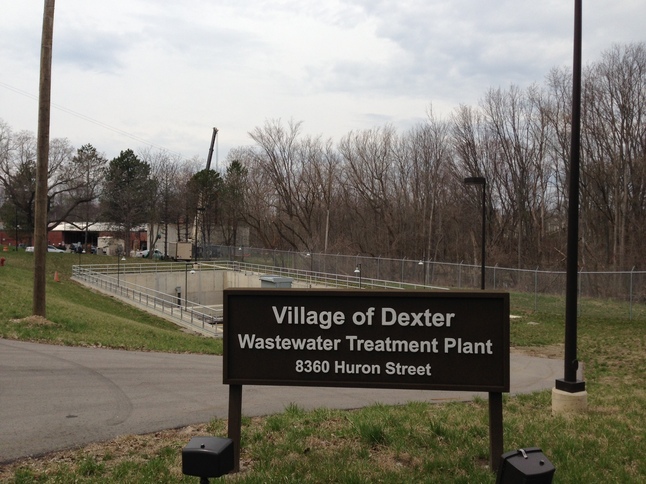
The Village of Dexter, Michigan (Dexter) hired an architecture and engineering firm, Orchard, Hiltz & McCliment, Inc. (OHM), to manage upgrades to its wastewater treatment plant. OHM offered its professional engineering services and agreed to, among other things, (1) prepare all design documents for the project and (2) be responsible for all “contract administration, construction engineering, construction observation, and construction staking.” After hiring OHM, Dexter contracted with general contractor A.Z. Shmina (Shmina) for project construction. The Dexter-Shmina contract explicitly designated OHM as the project engineer and required Shmina to maintain commercial general liability coverage for “[Shmina], the [Village of Dexter], and Orchard, Hiltz & McCliment, Inc.,…from claims arising out of the work described in this Contract.”
Shmina contacted Phoenix Insurance Company (Phoenix) for a commercial general liability policy. The Phoenix policy obtained provided that coverage would extend to additional insureds for whom Shmina “agree[d] in a written contract requiring insurance to include as an additional insured.” However, the Phoenix commercial general liability policy included the following exclusion (emphasis added):
[Excluded from this endorsement, however, is coverage for bodily injury, personal injury, or property damage arising out of the rendering of, or failure to render, any professional architectural, engineering or surveying services, including]:
- The preparing, approving, or failing to prepare or approve, maps, shop drawings, opinions, reports, surveys, field orders or change orders, or the preparing, approving, or failing to prepare or approve, drawing and specifications; and
- Supervisory, inspection, architectural or engineering activities.
To facilitate the removal of a digester tank at the wastewater treatment plant, Shmina subcontracted with Platinum Mechanical, Inc. (Platinum) who subcontracted with Regal Rigging & Demolition (Regal). As required under the Shmina-Platinum contract, Platinum obtained a commercial general liability policy from Federated Mutual Insurance Company (Federated). Although the Shmina-Platinum contract required Platinum to add Shmina, Dexter, and any additional parties as required by the Dexter-Shmina contract, Platinum’s Federated commercial general liability policy extended coverage only to the following: “any person or organization…for whom you are performing operations when you and such person or organization have agreed in writing in a contract or agreement that such person or organization be added as an additional insured on your policy.”
The Federated policy, similar to Phoenix, contained a professional services exclusion, excluding coverage for bodily injury, property damage or personal injury resulting from:
[a]ny person or organization whose profession, business or occupation is that of an architect, surveyor or engineer with respect to liability arising out of the preparation or approval or the failure in preparation or approval of maps, shop drawings, opinions, reports, surveys, field orders, change orders, designs, drawings, specifications or the performance of any other professional services by such person or organization[.]
On 22 April, 2013, after construction had commenced, a fatal incident occurred on the project. While a Regal worker was using a cutting torch to remove bolts from the digester tank lid, sparks ignited gas within the tank and caused it to explode. The explosion injured the Regal worker and killed a nearby Platinum pipefitter. Present during the incident, was an OHM engineer.
Afterwards, the Regal worker and the estate of the deceased Platinum pipefitter respectively brought personal injury and wrongful death actions against OHM. Both parties alleged that OHM breached its duty as an ordinary professional engineer. The Regal worker claimed that OHM “had a duty to exercise ordinary skill and care common to professional engineers and/or architects [that required it] to supervise all operations and to include in the plans, specifications and drawings, methods for safe removal of the digester lids.” (Emphasis added.)
OHM filed a declaratory action asking a Michigan state court to compel Phoenix and Federated to defend and indemnify OHM per their commercial general liability policies. OHM asserted that it was an additional insured covered by both policies and that neither policy’s professional services exclusion applied. After the defendant-insurers removed the case to federal court and filed motions for summary judgment against OHM, the Eastern District of Michigan federal court awarded the insurers their motion. Specifically, the court found that only the Phoenix policy covered OHM, since Federated’s policy did not directly or indirectly mention OHM. Then, the court interpreted the underlying claims brought against OHM as sufficiently within Phoenix’s professional services exclusion provision. OHM appealed to the federal Sixth Circuit Court of Appeals.
In ORCHARD, HILTZ & MCCLIMENT, INC. v. PHOENIX INS. CO., Nos. 16-1176, 16-1231, 2017 WL 244787 (6th Cir. Ct. 20 January, 2017), the Sixth Circuit Court of Appeals affirmed the district court’s summary judgment award finding no genuine dispute of material fact that the claims against OHM fell within the defendant-insurers’ professional services exclusion. Applying Michigan law under the Erie doctrine, the federal court applied the relevant insurance policy interpretation standard. When an insurer’s duty to the insured is in question, the court must determine (1) whether coverage exists and (2), if so, whether the policy contains an exclusion to the coverage. The court agreed that the Phoenix policy covered OHM; however, it did not decide on the issue of Federated’s policy coverage because the court concluded that the exclusions were sufficiently determinative.
The court then moved to the breadth of the term “professional services.” Under Michigan law, professional services broadly covers duties that are “predominately intellectual in nature.” However, the court emphasized that professional titles alone do not implicate professional services. Instead, it is the conduct that caused the underlying claim against the insured that implicates professional services. (emphases added). To determine whether the underlying personal injury and wrongful death claims were caused by OHM’s conduct fell within the professional services exclusion, the court applied the Hilderbrandt 2-part project engineer professional services analysis: An insurer’s professional services exclusion applies when (1) the insured has a duty to recognize and advise on safety violations in a given project and (2) a failure to do so includes a failure to render the professional inspection and supervision services because the recognition of such a violation involves some specialized knowledge and expertise in the area in which the underlying claim occurred. (emphasis added).
The court reasoned that because Dexter hired OHM to design, monitor, and supervise all aspects of the project OHM had a duty to recognize and advise on safety violations. The underlying claims contended that OHM breached that duty failing to provide safer procedures for digester lid removal involves a specialized knowledge and expertise. The underlying claims, the court concluded, were “predominately intellectual in nature.” Consequently, both policies excluded OHM’s coverage.
In the alternative, OHM asserted the illusory coverage doctrine, namely, that Michigan case law requires courts to interpret insurance policies so that they are not “merely a delusion to the insured.” That is, so that the commercial general liability policy actually covers something for project engineers. The court briefly dispensed with the argument by stating that coverage existed for work that fell outside of the professional services exclusion.
Best Practices:
- Insurer’s duty 2-part test – As the court expressed, a common test for determining an insurer’s duty to an insured is (1) whether coverage exists and (2), if so, whether an exclusion to the coverage exists within the policy.
- Commercial general liability professional services exclusion – Such professional services exclusions are common within commercial general liability policies.
- Professional liability insurance – To fill a liability gap that commercial general liability policies might exclude, professional liability insurance policies might be more appropriate for covering such professional services. OHM actually had professional liability insurance, and the insurer has defended OHM against the claims.
- Duty to defend v. indemnify – If covered for a claim without exclusion to defend and indemnify, the insurer’s duty to defend is much broader than its duty to indemnify. In jurisdictions, such as Michigan, the former requires the insurer to defend the insured against all covered claims even if the actions seem frivolous or without merit. The duty to indemnify, on the other hand, cannot be triggered until the insured’s liability for the underlying claims is determined. Generally, however, both duties must be specified within the policy for each to apply.
- Professional services determined by the nature of the act or omission – Determining whether a professional service was being rendered depends on the nature of the act or omission, not the character or title of the person who acted or failed to act.
- Burdens of proof on both the insured and insurer – Under Michigan law, the insured (here OHM) must first prove that coverage exists. Then, it is the insurer’s (here Phoenix and Federated) burden to prove that an exclusion within the coverage applies.
- Putative additional insured – Generally, coverage to parties not directly involved in a commercial general liability policy is limited to additional parties expressly included. However, courts often permit “putative” additional insureds within the coverage based on their contractual privity, or connection, with the insured. Here, the district court denied such additional coverage from OHM to the Federated policy because it was not expressly included. Although the Sixth Circuit declined to rule on that decision, it is in the best interest of the owners, architects, general contractors, and subcontractors to contractually require that other parties include them in their commercial general liability policies as additional insureds.
- Hilderbrandt 2-part project engineer professional services analysis – An insurer’s professional services exclusion applies when (1) the insured has a duty to recognize and advise on safety violations in a given project and (2) a failure to do so includes a failure to render the professional inspection and supervision services because the recognition of such a violation involves some specialized knowledge and expertise in the area in which the underlying claim occurred. (See Hilderbrandt ex rel. Estate of Hilderbrandt v. Rumsey & Sons Constr., No. 220340, 2001 WL 624966 (Mich. Ct. App. June 5, 2001)).
- Illusory coverage doctrine – As stated above, the doctrine has generally developed to deny court-interpretations of policies that render provisions useless. Based on the Sixth Circuit’s brief dispensation of the claim, it appears to receive less credibility in certain arguments. It nevertheless makes one wonder. For project engineers, what is “outside the provision of professional services?”
- Michigan law – The court’s reasoning was and conclusion is a product of Michigan state law. Accordingly, most of the decision is not binding precedent in Ohio. Nevertheless, the Sixth Circuit’s coverage of Michigan, Ohio, Kentucky, and Tennessee renders its state-specific decisions especially persuasive across the Circuit.
– Christian H. Robertson II
All materials have been prepared for general information purposes only to permit you to learn more about construction law. The information presented is not legal advice, is not to be acted on as such, may not be current and is subject to change without notice.
 Ohio Construction Law Blog