
153.63 Escrow of Moneys due under Public Improvement Contract: Court Finds State as Public Owner, not School District|[OH CT APP]|
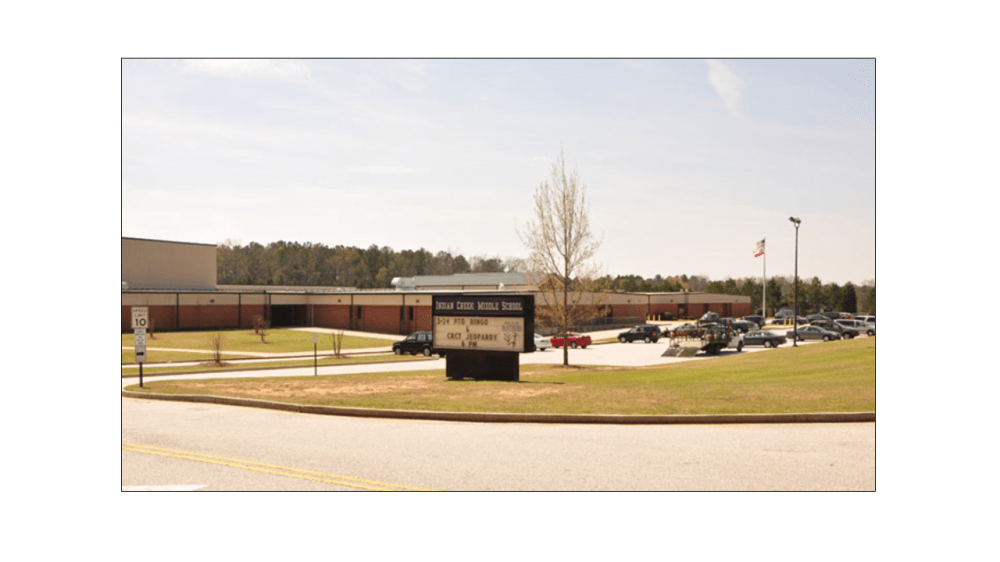
In 2010, a general contractor was awarded a contract to build a new middle school for the Indian Creek Local School District. The construction contract was “made and entered into by and between the [contractor] and the State of Ohio, through the President and Treasurer of the [school district].” The contract provided that, pursuant to public improvement prompt pay rule R.C. 153.63(A), all retained funds would be deposited into an escrow account or paid directly to the contractor when a major portion of the work is occupied or in use unless there existed defective work not yet remedied by the contractor. The Ohio School Facilities Commission, as co-funder of the public “classroom facilities” improvement, approved and ratified the contract.
In January 2013, the school district began occupying the facility and, shortly thereafter, discovered subsurface drainage problems in the school parking lot. The contractor claimed it resulted from the architect’s defective design and requested for the release of the construction payment retained by the school district. The request was denied. In December 2015, as a result of the payment dispute, the contractor filed a petition to compel arbitration in the Jefferson County Court of Common Pleas under R.C. 153.63(B) which states:
When a public owner, as defined in division B of section 2743.01, and the contractor disagree as to the conditions under which money is to be paid…the parties shall apply for a decision by arbitration (emphases added). R.C. 153.63(B).
The school district responded to the petition by generally claiming that the court of common pleas lacked jurisdiction (1) statutorily under R.C. 153.63(C) that, unlike section (B), requires the contractor to file disputes to the court of claims when the public owner is the state and (2) contractually under the provision that limited the jurisdiction for surety and money damages claims to the court of claims:
[Ohio Court of Claims] has exclusive jurisdiction for any action or proceeding by the Contractor or the Contractor’s surety for any money damages concerning any agreement or performance under the Contract documents. (Colaianni-Indian Creek construction contract provision).
The central issue at trial was determining the public owner of the middle school as implicated under R.C. 153.63. If the public owner was the school district and not the state, the court would grant the contractor its petition to compel arbitration over the school district’s failure to release retained funds under R.C. 153.63(B). If the public owner, however, was the state, the common pleas court would lack jurisdiction in surety disputes and the contractor’s judicial procedural remedies would be limited to the court of claims.
At trial, the court granted the contractor’s petition to compel arbitration under the definitional distinctions between “State” and “School District” set forth under court of claims statute, R.C. 2743.01, as referred to under R.C. 153.63(B), (C). The statute delineates the two under the following sections:
[The meaning of] ‘State’ does not include political subdivisions. R.C. 2743.01(A).
‘Political Subdivision’ includes school districts… R.C. 2743.01(B).
The school district appealed the decision contending that the trial court erred by defining it as the public owner rather than the state and ordering arbitration.
In COLAIANNI CONSTRUCTION, INC. v. INDIAN CREEK LOCAL SCHOOL DISTRICT, No. 16 JE 0009, 2016 WL 7291139 (7th Dist. Dec. 12, 2016), the appellate court overturned the trial court’s decision to compel arbitration for lack of subject matter jurisdiction and found that the state was indeed the public owner. The 7th District Court of Appeals found the school district’s “entirety” interpretation of R.C. 153.63 persuasive, namely the argument that sections (B) and (C) must be read with section (A) which narrows the scope of R.C. 153.63 to “money to be paid under this section… [and the] contract entered into…” That is, when the funds are at least partially provided by and the contract entered into on behalf of the Ohio School Facilities Commission, an independent state agency, its R.C. 3318 statutory provisions are implicated in the R.C. 153.63 definition of public owner. Specifically, the court cited the pertinent provision on the Ohio School Facilities Commission:
“School district” means a local, exempted village, or city school district as such districts are defined in Chapter 3311. of the Revised Code, acting as an agency of state government, performing essential governmental functions of state government pursuant to sections 3318.01 to 3318.20 of the Revised Code. (emphasis added) R.C. 3318.01(D).
Reading R.C. 3318.01 into R.C. 153.63, the appellate court found that the school district was an agent of the state and, therefore, the state was the public owner. Moreover, the court agreed with the school district’s assertion that the contract’s preamble and signature blocks further substantiated the claim that the state was the public owner and party to the contract.
The contractor claimed that this decision was contrary to the 7th District’s 1993 decision in Salem City School Dist. Bd. of Educ. v. Ultra Builders, Inc. Salem City School Dist. Bd. of Educ. v. Ultra Builders, Inc., 7th Dist. No. 92–C–48 (Jan. 29, 1993). There, the court rejected the school district’s claim that it was not the public owner and upheld the trial court’s order to arbitrate. Here, the appellate court distinguished the Ultra Builders decision in several ways. First, the court noted that the pertinent language under R.C. 3318.01(D), “acting as an agency of state government”, was not added to the statute until 1994. Second, the court highlighted the fact that the Ultra Builders contract included a mandatory arbitration provision unlike the Colaianni-Indian Creek contract. Third, the Ultra Builders contract was for improvements to a football stadium which the court said is not a “classroom facility” governed by the provisions under R.C. 3318.
The contractor argued that even if the state was the public owner, there was an escrow agreement explicitly between the Colaianni Construction and the Indian Creek Local School District to which the school district was contractually obligated. The court rejected the argument and reverted to the main construction contract between the contractor and the state. It was there, the court opined, that the escrow obligations were elucidated. Accordingly, the construction contract limited the escrow agreement’s enforcement powers.
As a result of its decision, the appellate court held “that a contractor cannot bring suit for breach of the construction contract against the school district [if] the state is the party from whom the contractor must seek compensation for breach of such contract.”
Significance:
- Holding requires contractors to pursue surety and escrow matter remedies in the Ohio Court of Claims against the State – As the court plainly put, “it has been held that a contractor cannot bring suit for breach of the construction contract against the school district [if] the state is the party from whom the contractor must seek compensation for breach of such contract.”
- In such a co-funder public improvement, should the school district and the state not have proportional responsibility to pay? – Here, the opinion merely states that the school district and Ohio School Facilities Commission “co-funded” the project. This “co-funding” was the basis through which the court permitted a statutory interpretation of R.C. 153.63 to include R.C. 3318. But how much of a contribution implicates 3318? More than 50%? 50%? 25%? 1%? Theoretically speaking, under this opinion a school district could receive a small fund contribution from the Ohio School Facilities Commission and then place the onus completely on it to make payments withheld from contractors for disagreements such as claims of defective work.
- Potential ex ante (contractual) provisions to assist contractors – As a standard cannon of contract law, enforceable contract provisions must abide by the relevant statutes. Certain statutory language (i.e., “unless otherwise agreed upon”) provide ex ante (“before the event”) exceptions that permit parties to contract out of statutory requirements. Because the 153.63(C) requirement that contractors file actions in the court of claims when (1) the public owner is the state and (2) the parties “disagree as to the conditions under which money is to be paid under this section”, a contractor might redefine “the conditions” in the contract so that there does not exist a disagreement that triggers section (C). For example, the contract might provide the following: if funds retained by the public owner and owed to the contractor are not paid within a certain period after a certain event (i.e., majority completion of occupation) then the parties must decide the payments due in arbitration. In effect, this contract provision creates a temporal “condition”, rather than a condition of disagreement, that triggers mandatory arbitration. This end-a-round might be given short-shrift by a court as a mere disagreement condition in disguise. Furthermore, the court might make a public policy argument that disputes with the state should be decided on in a state court. Remember, however, that this contractual suggestion is not legal advice and only a thought-provoking assessment.
– Christian H. Robertson II
All materials have been prepared for general information purposes only to permit you to learn more about construction law. The information presented is not legal advice, is not to be acted on as such, may not be current and is subject to change without notice.
 Ohio Construction Law Blog